


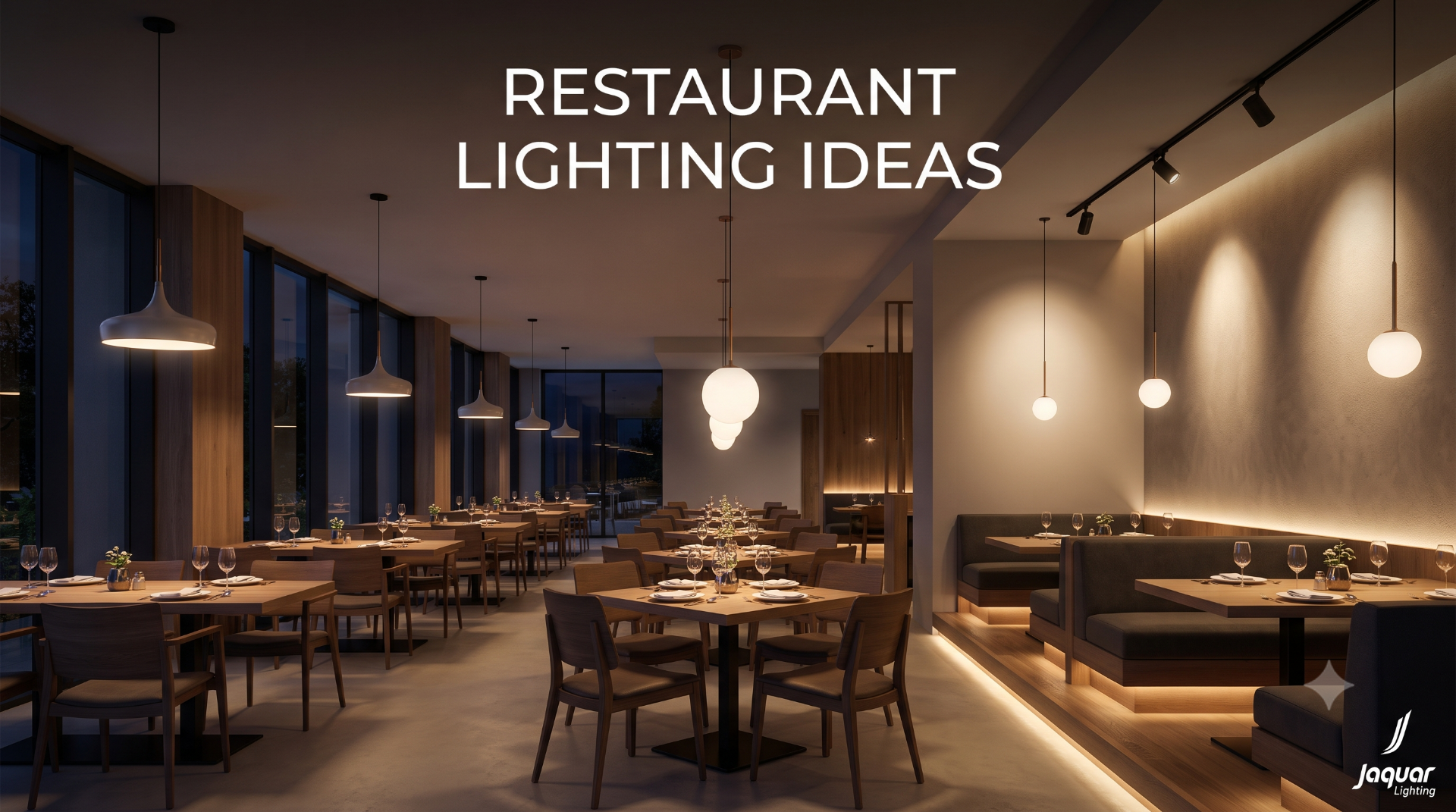
A restaurant's atmosphere is built from many details, but lighting is one of the few that can influence almost every part of the guest experience at once. It affects the way a dining room is perceived, the visibility of food and tables, the character of architectural features and the transition between different areas of the restaurant.
For this reason, lighting should be considered as part of the restaurant's spatial planning rather than something added after the interiors are finished.
Restaurants also differ enormously in scale and purpose. A neighbourhood café, a compact urban restaurant, a large dining room, a hotel restaurant and an establishment with outdoor seating may all require completely different lighting approaches.
The most useful starting point is therefore not a particular fixture. It is understanding what the space needs to accomplish.
What Makes Restaurant Lighting Effective?
Effective restaurant lighting balances three things: function, comfort and atmosphere.
Function means guests and staff can move through the space and use it comfortably.
Comfort means the light does not create excessive glare, distracting contrasts or an unnecessarily harsh environment.
Atmosphere means the lighting contributes to the restaurant's identity and creates a visual experience appropriate to the type of dining.
These objectives often overlap, but they are not identical.
A highly illuminated service area may be functional but unsuitable for the main dining room. A beautiful decorative pendant may create atmosphere but provide insufficient general illumination. A successful lighting plan brings these different requirements together.
1. Begin with General Indoor Lighting
Every restaurant requires a dependable foundation of illumination.
Indoor surface, recessed, linear or general lighting can provide this base depending on the architecture.
Recessed lighting is useful where a clean ceiling appearance is preferred. Surface fixtures can work where ceiling construction or design calls for visible fixtures. Linear lighting can reinforce long architectural lines, while general fixtures can provide broad illumination.
The layout should correspond to the restaurant's floor plan.
Instead of arranging fixtures simply according to ceiling geometry, consider where people sit, walk and work. A lighting grid that ignores the furniture layout can result in tables positioned between light sources or unnecessary brightness in circulation areas.
Jaquar's global indoor portfolio includes surface, recessed, industrial, linear, track and general lighting categories, providing different approaches for commercial interiors.
2. Create Focus Above Dining Tables
Dining tables are the heart of the restaurant, so they naturally deserve careful lighting.
Pendant fixtures can create a visual connection between the ceiling and table while establishing a more intimate zone for diners.
For long tables, repeated pendants can create rhythm. For smaller tables, a single fixture can become a focal point.
The height and scale should be considered carefully. A pendant that hangs too low can interfere with the dining experience, while one positioned too high may lose the sense of intimacy that makes the fixture effective.
Spacing should also reflect the furniture arrangement rather than simply following equal intervals across the ceiling.
3. Layer Wall Lighting into the Interior
Restaurant lighting can become much more sophisticated when vertical surfaces are included in the plan.
Wall lamps can illuminate otherwise dark surfaces, create visual depth and provide a softer layer between ceiling lighting and the furniture below.
They are especially useful along corridors, feature walls, seating areas and architectural transitions.
A series of similar wall lamps can also create rhythm in a long restaurant.
Jaquar's decorative portfolio includes wall lamps in different designs, making this type of lighting useful where function and interior character need to work together.
4. Use Decorative Lighting to Establish Identity
Decorative lighting is often the most visible expression of a restaurant's design language.
Pendants and chandeliers can become focal points in dining rooms, entrances and reception areas. Floor and table lamps can contribute to selected areas where the restaurant's layout allows them.
The important distinction is between decoration and clutter.
A restaurant does not need a statement fixture in every zone. In fact, repeating a small number of complementary fixture styles can create a stronger identity than combining too many unrelated designs.
The decorative lighting should have a relationship with the furniture, finishes, ceiling and overall architecture.
5. Use Accent Lighting to Direct Attention
A restaurant contains many visual elements, but they should not all compete for attention.
Track lighting can be useful when the direction of light needs to be adjusted toward selected architectural or decorative features.
A feature wall, artwork, display area, textured surface or architectural detail can receive focused illumination while surrounding areas remain comparatively quiet.
This technique creates visual hierarchy.
It also allows the restaurant to communicate its design more effectively because guests naturally notice the areas that have been intentionally emphasised.
6. Design Lighting Around Different Restaurant Zones
One of the most effective ways to plan lighting is to divide the restaurant into functional zones.
Entrance
The entrance establishes the first impression. Lighting should make the doorway and transition into the restaurant clear and welcoming.
Reception
Where applicable, reception or waiting areas can use decorative lighting to establish the restaurant's visual identity.
Main Dining Area
This zone needs the most balanced combination of general illumination and atmosphere.
Private Dining
A more concentrated lighting scheme can create a sense of separation without requiring heavy physical partitions.
Service Areas
Areas where staff work may need clearer illumination than guest seating areas.
Outdoor Seating
Exterior dining needs comfortable visibility while maintaining continuity with the interior.
Zoning prevents the entire restaurant from being treated as one large room.
7. Give Small Restaurants a Stronger Sense of Character
Small restaurants have less physical space, which means every design decision becomes more visible.
A compact ceiling can quickly become overcrowded if too many fixture types are introduced.
One approach is to establish a simple general lighting layer and then use pendants or wall lamps selectively.
For example, a repeated pendant above a counter or dining table can provide both illumination and identity.
Wall lighting can add depth without occupying floor space.
The principle is simple: fewer fixtures, more deliberate placement.
8. Use Lighting to Structure Large Dining Rooms
Large restaurants require a different strategy.
A wide-open room can feel visually empty if lighting does not create smaller areas of focus.
Pendant lighting can define seating groups. Linear lighting can reinforce architectural geometry. Track lighting can highlight selected areas, while general indoor fixtures maintain overall visibility.
Decorative chandeliers or larger hanging fixtures can provide visual anchors in important areas.
This creates an interior that feels organised without making the space physically smaller.
9. Use Outdoor Lighting as Part of the Same Experience
Restaurants with outdoor dining should consider exterior lighting as part of the complete customer journey.
Outdoor areas may include terraces, entrances, walkways, courtyards or landscaped seating.
Lighting should provide enough visibility for movement and dining while avoiding unnecessary brightness.
Outdoor surface fixtures, wall lighting, linear solutions and other exterior options can be selected according to the architecture and intended use.
The visual language should also remain connected to the interior. A restaurant with a carefully designed indoor environment can feel disjointed if its exterior lighting follows a completely unrelated style.
Jaquar's global portfolio includes outdoor linear, projector, street, surface, pole, bollard, post-top, ground-recessed and wall-recessed categories, providing different approaches for exterior applications.
10. Match Lighting to the Ceiling Height
Ceiling height affects both the technical and visual suitability of a fixture.
Lower ceilings generally benefit from compact fixtures or integrated lighting approaches that preserve visual openness.
Higher ceilings offer more opportunities for hanging fixtures, pendants and chandeliers.
The relationship between the fixture and the table is equally important. A decorative fixture should feel connected to the furniture below rather than floating independently in the ceiling.
In large spaces, fixture scale can also prevent the ceiling from feeling disconnected from the rest of the interior.
11. Consider the Restaurant's Materials
The same lighting can produce different results depending on the materials surrounding it.
Wood may appear warmer under certain lighting conditions. Stone can reveal texture when light reaches it from an appropriate direction. Glass can reflect light, while metallic finishes may create highlights.
This makes lighting placement just as important as fixture selection.
If a restaurant has a textured feature wall, directional illumination can make the texture more visible. If the interior is intentionally minimal, excessive accent lighting may undermine that simplicity.
Good lighting responds to the materials already present rather than trying to overpower them.
12. Choose Colour Temperature According to the Experience
Colour temperature has a direct influence on how a restaurant feels.
Warm illumination is commonly associated with relaxed, intimate environments. Neutral illumination can create a cleaner and more contemporary appearance.
The decision should be based on the restaurant concept, interior finishes and time of operation.
A restaurant serving breakfast and lunch may have different requirements from one primarily operating during evening hours.
Consistency should also be considered. Connected areas generally benefit from a coherent colour appearance rather than abrupt shifts between noticeably different light tones.
13. Consider Natural Daylight
Restaurants with windows, skylights or open façades can receive substantial natural illumination during the day.
Artificial lighting should be designed around this changing condition.
A lighting scheme that works at 8 p.m. may not need to operate at the same intensity at midday.
Where appropriate controls are available, separate lighting zones can respond to different conditions and operating periods.
The objective is a restaurant that feels comfortable at different times of day rather than one designed exclusively around a single lighting condition.
14. Think About Glare Before Installation
Glare is one of the easiest problems to overlook during planning.
A fixture may look attractive from across the room but become uncomfortable when viewed directly from a dining chair.
Positioning is therefore critical.
Guests should be able to look across the dining area without repeatedly encountering harsh light sources in their field of vision.
The same consideration applies to staff. Service routes and work areas should provide sufficient illumination without creating uncomfortable visual conditions.
Good lighting design considers the perspective of the people using the space, not just the appearance of the ceiling plan.
15. Use Repetition to Create Visual Rhythm
Restaurants often contain repeated elements: tables, chairs, booths, columns and ceiling features.
Lighting can reinforce this repetition.
A series of pendant fixtures above a row of tables can create rhythm. Repeated wall lamps can establish continuity along a corridor. Recessed fixtures can follow architectural lines.
Repetition also helps make a restaurant feel coherent.
Rather than selecting different fixtures for every part of the room, consider where one design can be repeated effectively.
16. Avoid Over-Illuminating the Dining Area
One of the most common mistakes is assuming that brighter automatically means better.
Restaurants are not offices. The dining environment needs sufficient visibility, but it also needs visual softness and hierarchy.
When every wall, table and ceiling surface is brightly illuminated, the eye has nowhere to rest.
A better approach is to establish a comfortable baseline and then selectively add emphasis.
The result is usually more visually interesting and more aligned with the way people experience hospitality spaces.
17. Avoid Mixing Too Many Design Languages
A restaurant can quickly become visually confusing when fixtures come from unrelated design styles.
For example, a highly contemporary interior may feel inconsistent if several decorative fixtures introduce unrelated traditional forms.
This does not mean every fixture must look identical.
Instead, look for relationships in shape, finish, scale or visual simplicity.
The lighting should feel like a collection rather than an assortment.
18. Plan the Lighting Before Finalising Furniture
Furniture and lighting influence one another.
The location of tables determines where pendant fixtures should sit. Seating height influences how wall lighting is perceived. Circulation routes influence where floor or wall fixtures can be placed.
Therefore, lighting should be planned alongside the furniture layout.
This is especially important for restaurants with fixed seating, booths or long communal tables because moving the furniture later may not be practical.
19. Select Lighting According to Restaurant Type
Different hospitality concepts can benefit from different lighting priorities.
Cafés: A combination of general illumination and decorative hanging fixtures can create an energetic but comfortable environment.
Casual restaurants: Balanced ambient lighting with focused table illumination can support longer dining periods.
Fine dining environments: Controlled brightness, decorative fixtures and carefully positioned accent lighting can create a more intimate atmosphere.
Large hospitality restaurants: Zoning, linear lighting, decorative focal points and outdoor solutions may all be required.
The fixture selection should follow the operational character of the space rather than a generic formula.
20. A Practical Lighting Selection Checklist
Before finalising the lighting plan, consider:
- What is the primary dining experience?
- Where are guests expected to spend the most time?
- Which architectural features deserve emphasis?
- How high are the ceilings?
- How much natural daylight enters the restaurant?
- Which areas require general illumination?
- Which areas need focused or decorative lighting?
- Are there outdoor seating areas?
- Could any fixture create direct glare?
- Do the selected fixtures work together visually?
- Can the lighting adapt to different times of day?
- Does the final scheme feel comfortable rather than simply bright?
Answering these questions can make the selection process considerably more straightforward.
Conclusion
Restaurant lighting works best when it is treated as part of the architecture, furniture and guest experience rather than as an isolated technical requirement. A successful scheme creates comfortable visibility, establishes visual hierarchy and gives the restaurant a distinctive atmosphere without overwhelming the people or interiors within it.
From compact cafés to larger dining spaces and outdoor hospitality areas, the right combination of indoor, decorative and outdoor lighting can adapt to different spatial requirements. The most effective designs are usually those where every fixture has a clear purpose and the overall scheme feels cohesive.
Jaquar's global lighting portfolio spans indoor, decorative and outdoor applications, allowing different lighting layers to be considered as part of one wider design approach. Its range of pendants, wall lamps, indoor fixtures and exterior solutions can help designers maintain a consistent lighting language across different hospitality environments.
FAQs
- What are the main types of lighting used in restaurants?
Restaurants commonly combine general or ambient lighting with accent and decorative lighting. Indoor recessed, surface, linear and track fixtures can provide functional illumination, while pendants, chandeliers and wall lamps can add visual character. - Are pendant lights suitable for restaurant dining areas?
Yes. Pendants are particularly effective above dining tables and counters because they establish a clear visual focus and can contribute to the restaurant's interior identity. - How can lighting improve a restaurant's atmosphere?
Layered lighting allows different areas to have different levels of visual emphasis. Controlled ambient lighting combined with decorative and accent fixtures can create depth and a more comfortable dining environment. - How should outdoor restaurant lighting be planned?
Outdoor lighting should support safe and comfortable movement while maintaining the atmosphere of the dining area. The selected fixtures should also complement the visual character of the interior. - How do I choose restaurant lighting for a large space?
Start by dividing the restaurant into zones. Use general indoor lighting for overall visibility, then use pendants, linear fixtures, track lighting or decorative fixtures to define important areas and architectural features.