


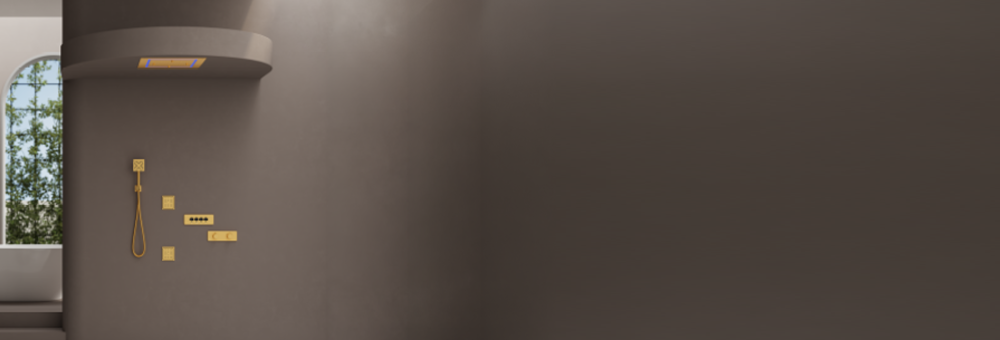
A shower can be as simple as a hand shower fixed to the wall or as elaborate as a complete setup with an overhead shower, body jets, different controls and multiple shower modes.
That is what makes choosing one slightly confusing.
There are several types of shower available today, and they are not all designed to do the same thing. Some give you more flexibility, some focus on the showering experience, while others are designed to keep the bathroom looking clean and uncluttered.
The best place to start is not with the showerhead itself. Think about how you use your bathroom, how much space you have and what you want from the shower.
Hand Shower: Flexible and Easy to Use
A hand shower is attached to a flexible hose, allowing you to hold and direct the water where you need it.
This makes it one of the more versatile shower options. You can use it for your regular shower, rinse specific areas or pair it with another shower outlet.
Jaquar offers hand showers in different shapes and designs, including single-flow and multi-flow options. The available settings vary by model.
A hand shower can also be combined with an overhead shower. In this arrangement, you get the broader overhead flow along with the flexibility of a handheld outlet.
For a straightforward bathroom, a hand shower on its own may be enough. For a more complete setup, it can become one part of a larger shower system.
Overhead Shower: Water From Above
An overhead shower is fixed above you and delivers water from the top.
It creates a different experience from a hand shower because you do not need to hold or direct the showerhead while using it. Jaquar's overhead shower range includes different sizes, shapes and flow options, including single-flow and multi-flow models.
The size of the overhead shower is something worth considering along with the available water pressure and the size of the shower area.
An overhead shower can be used on its own, but pairing it with a hand shower gives you more flexibility.
Rain Shower: A Softer, Broader Flow
A rain shower is designed to create a rainfall-like showering experience, with water falling from above.
The term is often used for overhead shower designs that provide a wider, more enveloping flow rather than a narrow stream.
Jaquar's shower range includes overhead shower designs with rain-shower experiences, alongside different flow options and sizes.
If you are looking at rain shower options, do not choose purely based on the size of the showerhead. The available water pressure and the specifications of the particular model also matter.
Duoflow Shower: Two Shower Experiences Together
A Duoflow shower brings two different water-flow experiences together.
Jaquar's Duoflow shower technology combines two flow patterns within the showerhead, allowing the user to choose between different experiences. The specific functions depend on the product.
This is useful if you do not want to choose between two completely different showerheads. Instead, the same fitting can offer different types of flow.
It is a small change in the hardware, but it gives you more choice without necessarily adding more outlets to the bathroom.
Body Shower: Bring the Water Around You
A body shower is positioned on the wall rather than directly above the head.
The idea is to add water outlets at different points around the body, depending on the shower configuration. Jaquar's shower range includes body showers and body jets designed for this type of setup.
Body showers can be combined with overhead and hand showers as part of a larger shower system.
They do, however, need to be planned into the bathroom. Since the outlets are installed in the wall, their position and plumbing need to be considered before the finishing work is complete.
Thermostatic Shower: Focus on Temperature Control
A thermostatic shower uses a thermostatic mixer to control the water temperature.
Jaquar describes thermostatic mixers as systems that balance hot and cold water flow to maintain a stable temperature. Its range includes thermostatic mixers in both concealed and exposed configurations.
This can be useful if maintaining a consistent temperature is important to you.
Thermostatic shower systems can also be paired with multiple outlets. Depending on the configuration, you may have an overhead shower, hand shower and other outlets controlled through the same system.
Smart Shower: More Control Over the Experience
A smart shower takes shower controls into the digital space.
Instead of relying entirely on conventional handles, digital controls can be used to manage functions such as temperature, water flow and shower modes.
Jaquar Cloud is one example. Its system combines digital and analogue controls and allows users to select different shower modes through a touch interface. Depending on the configuration, these can include rain, waterfall, mist, hand shower and body shower modes.
Some digital shower systems can also store preferred settings, making it easier for different users to have the shower experience they prefer.
The point of smart technology here is not simply to add more controls. It is to make the shower easier to customise.
Digital Shower: When the Controls Go Digital
A digital shower uses electronic controls to manage elements such as water temperature and flow.
Jaquar's digital shower guidance highlights precise temperature and flow control, with selected systems offering programmable settings.
This can be particularly useful in a bathroom used by several people, where everyone may have different preferences.
Digital controls can also make a multi-outlet shower easier to manage. Instead of treating the overhead shower, hand shower and other outlets as separate systems, they can be brought together through a central control interface.
Shower Panel: Several Functions in One Place
A shower panel brings several shower functions into one vertical installation.
Depending on the design, a panel can combine different outlets and controls in one unit. Jaquar's shower concepts include systems that bring together overhead showers, hand showers and body shower functions.
A shower panel can therefore be useful when you want several shower functions without having to think of each outlet as a completely separate fitting.
The available functions depend on the particular product, so check the specifications before deciding what you need.
Concealed Shower: Keep the Wall Clean
A concealed shower system hides the main valve and working components behind the wall.
Only the parts needed for operation remain visible. This creates a cleaner appearance and works particularly well with bathrooms where a minimal look is important.
Jaquar offers concealed shower mixers and thermostatic systems designed for this type of installation.
The main thing to remember is that concealed installation needs to be planned before the wall is finished. Once the plumbing is hidden, making changes later can involve additional work.
Exposed Shower: Keep Everything Accessible
With an exposed shower system, the main shower valve and other components remain visible on the wall.
This gives the shower a more conventional appearance and can make the visible components easier to access.
Jaquar's range includes exposed thermostatic mixers as well as exposed shower systems with different outlet configurations.
For an existing bathroom where you do not want to make major changes to the wall, an exposed system can be worth considering.
How Do You Choose Between Different Shower Types?
Once you know what the different options do, the decision becomes less complicated.
Start with the space.
A compact bathroom may not need a large multi-outlet shower system. A hand shower or a combination of an overhead and hand shower may be enough.
If you have more space and want a more immersive experience, you could consider adding body showers or multiple outlets.
Then think about control.
If you want straightforward manual operation, a conventional mixer may be all you need. If temperature consistency matters, a thermostatic system may be more suitable. And if you want to control different modes digitally, a smart or digital shower system is worth exploring.
Finally, think about the installation.
A concealed shower looks clean, but the plumbing needs to be planned inside the wall. An exposed shower keeps the main components visible and can be easier to consider when working with an existing setup.
What About Water Pressure?
Water pressure should not be ignored when choosing a shower.
Different shower systems and outlets have different requirements, and the available water pressure can affect how the shower performs. Jaquar's shower guide recommends considering the home's water system and pressure before choosing a shower.
This becomes particularly important with larger overhead showers or systems with multiple outlets.
Before buying, check the requirements of the particular shower rather than assuming that every model will work in the same way with your existing plumbing.
Which Shower Type Is Best for a Small Bathroom?
A smaller bathroom does not automatically mean you have to give up on a good shower experience.
A hand shower can be a simple and flexible choice. An overhead shower can also work if the space and water supply are suitable.
If you are renovating, a concealed shower system can help keep the wall visually clean. But remember that concealed installation needs to be planned before the wall is closed.
The key is to avoid adding outlets simply because there is space for them. Choose the ones you are actually going to use.
Bringing the Shower Together
The different shower concepts available today give you plenty of room to create a setup around your own routine.
You might prefer the simplicity of a hand shower. You might want the broad flow of a rain shower, the flexibility of an overhead and hand shower combination or the control offered by a thermostatic or digital system.
There is no single best combination.
The right choice depends on your bathroom, water pressure, installation plans and the kind of shower experience you want every day.
FAQs
What are the different types of showers?
There are several types, including hand showers, overhead showers, rain showers, Duoflow showers, body showers, thermostatic showers, smart and digital showers. Shower systems can also be classified by installation, such as concealed and exposed systems.
What is the difference between a hand shower and an overhead shower?
A hand shower is connected to a flexible hose and can be held and directed by the user. An overhead shower is fixed above and delivers water from above. The two can also be used together in the same shower system.
How does a smart shower system work?
A smart shower uses digital controls to manage functions such as temperature, water flow and shower modes. Jaquar Cloud uses a touch interface to select different shower modes, with functions depending on the system configuration.
What is a rain shower and how is it different from a regular shower?
A rain shower is designed to create a broader, rainfall-like flow from above. It is generally associated with overhead shower installations and can offer a different experience from a more focused shower flow.
What is a Duoflow shower system?
Duoflow shower technology combines two different water-flow experiences within the same shower fitting. Jaquar offers Duoflow shower products designed to provide a choice of flow patterns.
How do body showers improve the showering experience?
Body showers or body jets add water outlets at different positions on the wall, allowing water to reach different areas of the body. They can be combined with overhead and hand showers as part of a larger shower system.
Which shower type is best for a small bathroom?
A hand shower or a simple overhead shower can work well in a smaller bathroom, depending on the layout and water supply. A concealed system can also keep the wall visually clean. The best choice is the one that fits the available space without adding functions you do not need.