


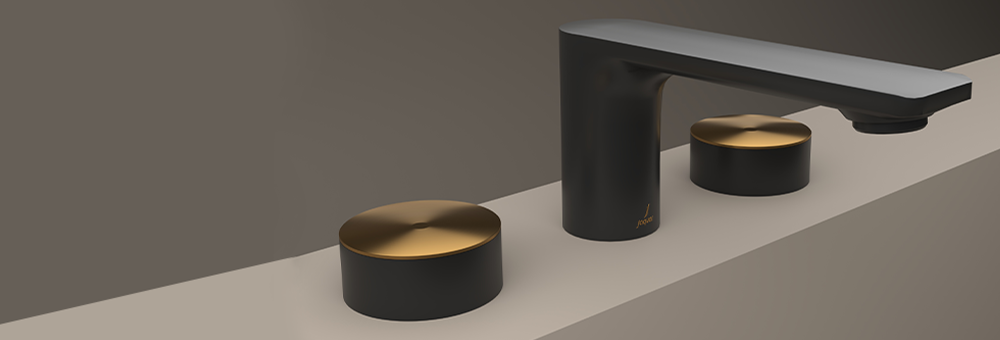
A tap is one of those things you use every day without giving it much thought. Turn it on, use the water and turn it off. But when you are planning a bathroom or kitchen, you quickly realise there are quite a few options to choose from.
There are mixer taps, pillar taps, basin taps, bib taps, wall-mounted faucets and sensor faucets. Then there are different ways to operate them, different mounting options and a wide range of finishes.
So, which one do you actually need?
The answer depends on where the tap will be used, how you want it to work and the kind of space you are creating. Here is a simple look at the main types of taps and where each one fits.
Bathroom Taps: Start With the Basin
The basin is usually the best place to start when choosing a bathroom tap.
A tap can be mounted directly on the basin or countertop, or it can be fixed to the wall behind it. The basin itself may also be designed for one tap hole, multiple holes or no tap holes at all.
This is why there is no single bathroom tap that works for every basin.
Basin Taps
Basin taps are designed specifically for washbasins and come in different configurations.
A traditional pillar tap uses separate fittings, while a basin mixer brings the water through a single spout. Single-lever basin mixers are also available, where the same control is used to adjust flow and temperature.
If you are replacing an existing tap, check the basin before buying the new one. The number and position of the holes, along with the available space, will determine which fittings can be installed.
Mixer Taps
A mixer tap combines hot and cold water through a single spout.
This makes it a practical choice when you want to adjust the water temperature from one fitting. Mixer taps are available in different designs and can be used across bathroom and kitchen applications.
A single-lever mixer takes this a step further by bringing the controls together into one lever. The exact arrangement varies by product, so it is worth checking how the particular mixer operates before making your choice.
Pillar Taps
Pillar taps are the more traditional arrangement, with separate taps for hot and cold water.
They are installed through separate openings and are particularly suited to basins designed for this type of fitting.
One thing to remember is that pillar taps do not mix hot and cold water within the fitting. Each tap controls its own water supply.
For bathrooms where the basin already has separate tap holes, pillar taps can be a straightforward option.
Wall-Mounted Faucet
A wall-mounted faucet is fitted to the wall behind the basin rather than directly onto the basin or counter.
It is a useful option when the basin does not have tap holes or when you want to keep the basin surface clear.
The installation needs to be planned carefully, though. The faucet has to be positioned at the right height and distance from the basin so that the water falls correctly.
Because the pipework is hidden behind the wall, a wall-mounted faucet is best considered before the bathroom installation is complete. Changing to this type of installation later can involve additional plumbing work.
Kitchen Faucets: Different Needs, Different Taps
A kitchen tap has a different job from a bathroom tap.
The sink is used for washing dishes, filling containers and carrying out a number of everyday tasks, so the height, reach and movement of the faucet matter.
This is where kitchen faucets and sink mixers come into the picture.
Sink Mixers
A sink mixer combines hot and cold water through one spout and is designed for use with a kitchen sink.
Depending on the design, a sink mixer can have a single lever or another control arrangement. The height and reach of the spout should work with the size and depth of the sink.
If you regularly use large vessels or containers, this is something worth considering before choosing the faucet.
A faucet that looks good but has the wrong reach can quickly become inconvenient.
Sensor Faucets
Not every tap needs to be operated by hand.
Sensor faucets use infrared technology to detect hand movement and turn the water flow on automatically. Jaquar offers sensor faucets for washbasins, including models designed for both residential and commercial applications.
The biggest difference is the way the water is activated. There is no need to operate a conventional handle or lever.
This can be particularly useful in spaces where touch-free operation is preferred. Sensor faucets are also available in different designs, so choosing one does not mean compromising on the overall look of the bathroom.
Quarter Turn Taps
The name tells you how these taps work.
A quarter turn tap can be turned fully on or off by rotating the handle through 90 degrees. Jaquar's glossary explains that these taps use ceramic discs, which allow control over water flow and provide smooth operation.
You will find quarter-turn options across different faucet categories, including pillar cocks, basin mixers, wall mixers, sink mixers and bib cocks.
For someone replacing an older tap, the operating mechanism is worth considering alongside the appearance. The way a tap opens and closes becomes part of everyday use, after all.
Bib Taps
A bib tap is one of the simpler types of taps and is commonly used where water needs to be supplied from a wall or pipe connection.
Jaquar defines a bib tap as a tap with a downward-bent nozzle and a horizontal water inlet. Its product range includes standard bib cocks as well as two-way bib cocks.
You will commonly see this type of fitting where a straightforward water outlet is required rather than a basin or sink mixer.
The choice between a standard bib tap and a two-way version depends on the installation and how the water outlet needs to be used.
Tap Finish: More Than Just a Colour Choice
Once you have decided what type of tap you need, there is another decision to make: the finish.
Chrome is a familiar choice and works with a wide range of bathroom and kitchen designs. But it is not the only option.
Jaquar's faucet range includes finishes such as black matt, black chrome, graphite, stainless steel, antique bronze, antique copper and PVD finishes in selected ranges.
The easiest way to choose is to look at the rest of the space.
If your bathroom has a simple, minimal design, a contrasting finish can make the tap stand out. If the space already has several strong elements, a more understated finish may sit better within the overall look.
There is also the practical side. Different finishes can have different care requirements, so check the manufacturer's cleaning guidance for the particular product.
Single-Lever or Dual-Handle?
This is another choice you may come across when looking at types of taps.
A single-lever faucet combines the controls into one lever. It can control water flow and temperature from the same point.
Dual-handle taps keep the hot and cold controls separate. They offer a different way of controlling the water and are also used in certain basin and sink configurations.
Neither is automatically the better choice. Think about how the tap will be used and what your basin or sink allows.
For a modern bathroom, a single-lever basin mixer can provide a clean and simple arrangement. In other spaces, separate controls may work better with the basin design.
What Should You Consider Before Buying a Tap?
With so many designs available, it is easy to start with the finish or shape. It is usually better to start somewhere else.
Look at the installation.
Is the tap going on the basin, countertop or wall? This will immediately narrow down your options.
Check the water connections.
The new tap needs to work with the existing plumbing or the plumbing planned for the new bathroom or kitchen.
Think about the space.
A large faucet may not work well with a small basin. Similarly, a short-spout tap may not be practical for a deep kitchen sink.
Consider how you use the space.
A bathroom basin and kitchen sink may both need running water, but the way they are used is very different. Choose the faucet around that everyday use.
Then think about the finish.
Once the practical decisions are made, you can look at the shape, colour and finish that best suit the space.
What About Tap Installation?
Installation depends on the type of tap and the existing setup.
A deck or countertop tap needs the right provision on the basin or counter. A wall-mounted faucet needs the water connections to be positioned inside the wall. Sensor faucets require their specific installation and power arrangements.
This is why it is useful to decide on the tap before the plumbing work is completed, especially for a new bathroom or kitchen.
For a straightforward replacement, the existing connections may already be suitable. But if the new tap requires changes to the plumbing, professional installation is the safer route.
How Long Should Bathroom Taps Last?
There is no single replacement schedule that applies to every tap.
The condition of the faucet is a better indicator. A tap may need attention if it starts leaking, becomes difficult to operate, develops visible damage or no longer works properly.
Maintenance matters too. Regular cleaning and using the correct care method for the finish can help keep the faucet in good condition.
Jaquar provides product-specific care and maintenance guidance, so it is always worth checking the instructions for the particular faucet rather than using a generic cleaning method.
So, Which Type of Tap Is Right for You?
There is no one answer.
A basin mixer can make sense for a contemporary bathroom. Pillar taps can suit a basin designed for separate hot and cold fittings. A wall-mounted faucet can keep the basin area clear. In the kitchen, a sink mixer can offer the flexibility needed for everyday tasks, while a sensor faucet brings touch-free operation to the space.
Then there are quarter-turn taps, bib taps and other fittings designed for more specific requirements.
The important thing is to choose based on the installation, basin or sink, everyday use and overall bathroom or kitchen design. Once those things are clear, the choice becomes much less complicated.
FAQs
What are the different types of taps?
The main types include basin taps, mixer taps, pillar taps, wall-mounted faucets, sensor faucets, quarter-turn taps, bib taps and sink mixers. Different types are suited to different applications, mounting arrangements and ways of controlling water.
What is the difference between a tap and a faucet?
They refer to the same type of fixture used to control water flow. “Tap” is commonly used in India and the UK, while “faucet” is more widely used in other markets and in product terminology.
Which type of tap is best for a modern bathroom?
Basin mixers and single-lever faucets can work well in modern bathrooms because they offer a clean arrangement and allow water flow and temperature to be controlled from one fitting. Wall-mounted options can also suit bathrooms where a more streamlined basin area is preferred.
What is the difference between a mixer tap and a pillar tap?
A mixer tap combines hot and cold water through one spout. Pillar taps use separate fittings for the hot and cold water supplies.
How do I choose the right tap for my kitchen?
Start with the sink and the way you use it. Check the mounting arrangement, available space, spout height and reach, water connections and the type of control you prefer. A sink mixer can be useful where you want hot and cold water controlled through one fitting.
Are single-lever faucets better than dual-handle taps?
Neither is automatically better. A single-lever faucet combines the controls into one fitting, while dual-handle taps keep the hot and cold controls separate. The better choice depends on the basin or sink, installation and personal preference.
How often should bathroom taps be replaced?
There is no fixed replacement period for every bathroom tap. Consider replacement when the faucet is damaged, leaking repeatedly, difficult to operate or no longer suitable for the basin or bathroom setup. If the problem is limited to a replaceable component, repair may be possible instead.